

Green Screen, LED Walls and AI: What Productions Are Actually Shooting in Our Studio
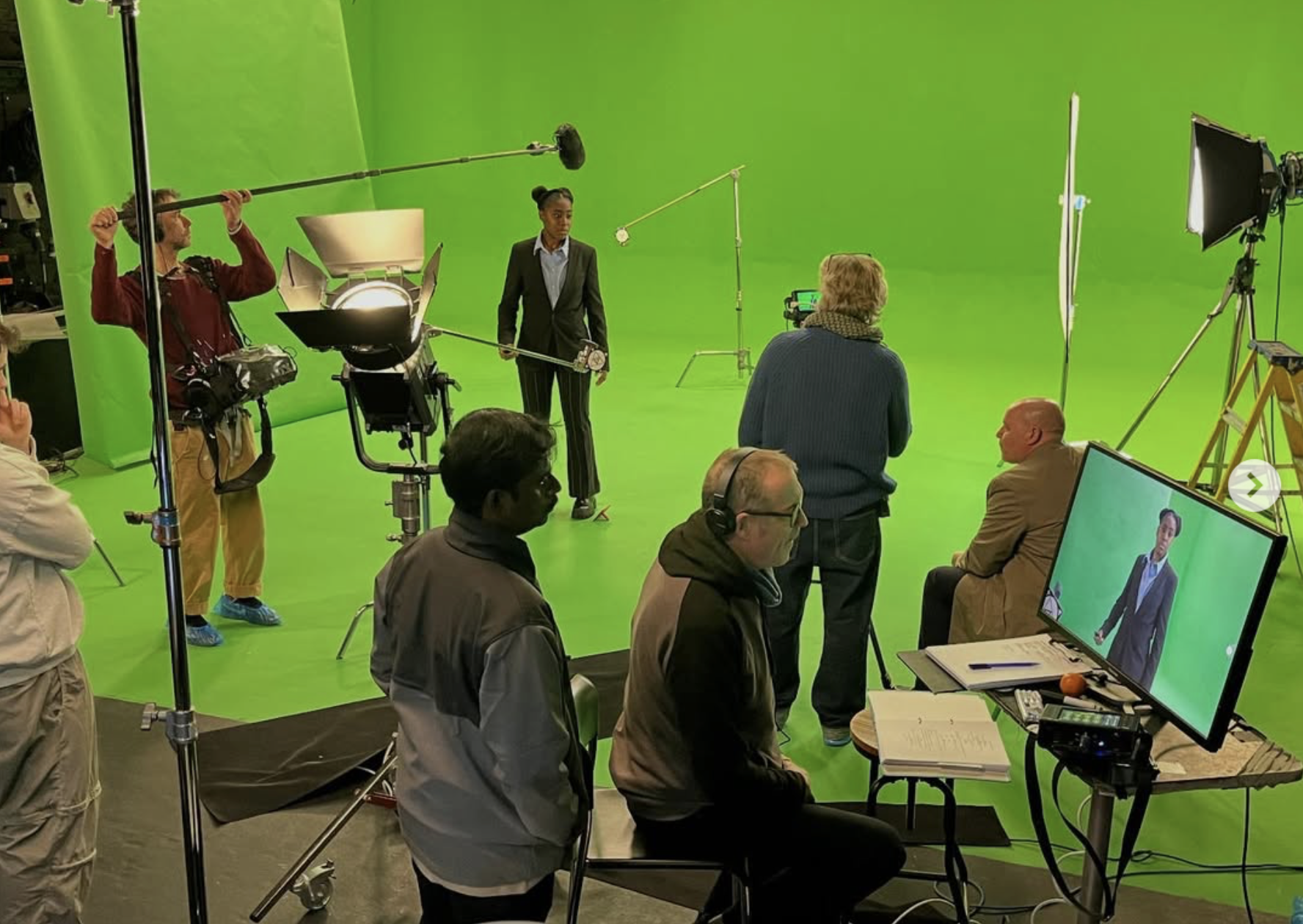 On Tuesday 4 August 2026, the Royal Opera House was filming at our studio against green screen for an upcoming ballet. The following day, CUBE Studio came in and built an LED wall in the same space. Two consecutive days, two completely different concepts of what a studio is for.
That is more or less the state of studio production at the moment. Producers and directors no longer have to decide between filming everything practically or building the world in post. Green screen, LED walls, AI-generated environments or a set build are all options, and increasingly two or three of them feature on the same job.
We see the full range here, so it seems worth setting out what each approach actually gives you, and what it costs you in planning.
Live action with AI-generated backgrounds
The newest arrival is AI-generated imagery sitting behind traditionally filmed performances. Earlier in 2026 we hosted a week-long drama shoot on the green screen infinity cove where the production was built around AI-generated environments. The actors performed live in the studio, and the world around them was created afterwards. What struck me watching it is how little of the day-to-day work changed. The performances, the lighting, the camera moves and the direction all still happened in the traditional way, in the same order, with the same people. What changed was the range of places the story could be set without travel or location fees. For productions with unusual settings, invented environments, or simply more locations than the budget allows, that unlocks huge possibilities. It is another tool in the filmmaker’s arsenal.Green screen is doing more work, not less
Given how much is written about newer technology, you would expect traditional chromakey to be winding down. We are seeing the opposite. The green screen studio is booked across drama, commercials, YouTube productions, entertainment formats and branded content. The Royal Opera House shoot I mentioned above was straightforward green screen work for a stage production and virtual sets are often created on post behind green screen interviewees.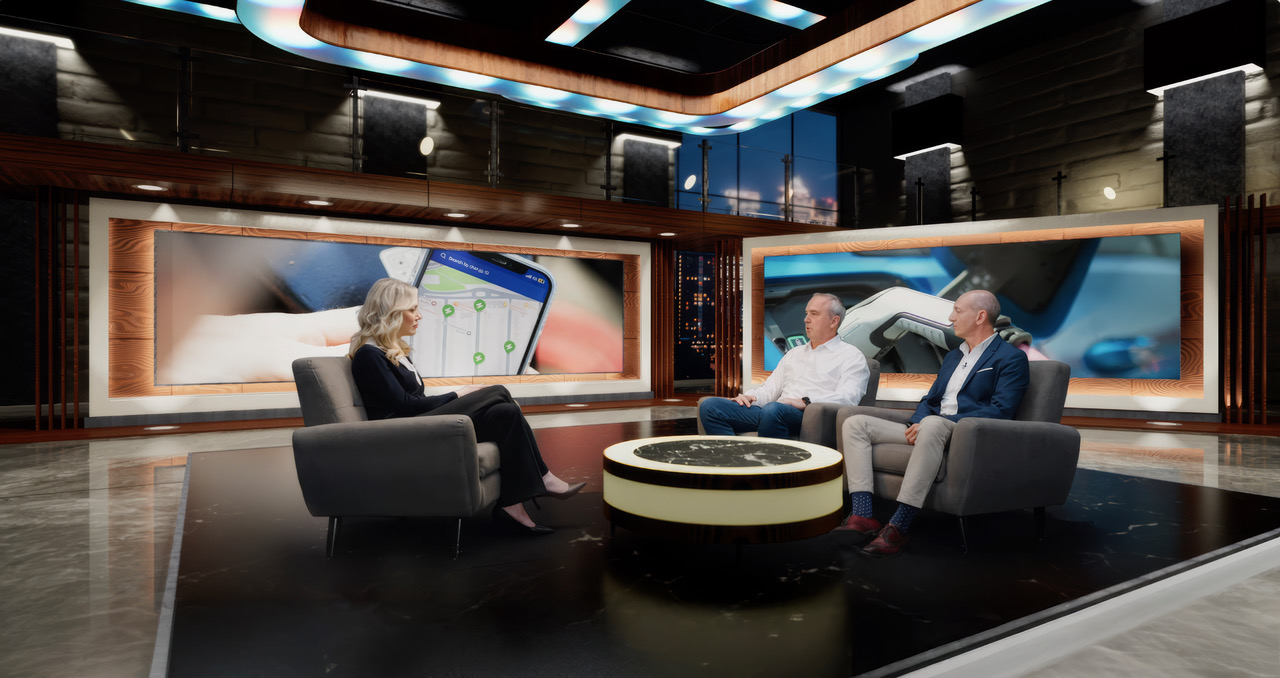
An interview filmed against green screen at Mount Pleasant Studio, with the virtual background added in post-production.
Although most productions have a full plan in place, when expedient, green screen defers the final decision. You do not have to know on the shoot day exactly what sits behind your subject, which matters a great deal if the client has not signed off the environment, or when the same material has to work in four different edits. That flexibility can be worth more to most productions than the in-camera result they would get from a wall. It also sits comfortably alongside the newer workflows. A good deal of the AI and virtual production work we see still starts with a well-lit green infinity cove. Having repainted this cove more times than we care to count, I would say the space matters more than the paint. Our stage is 31ft wide and 41ft deep, which is large enough to light the talent separately from the background. Green spill is what makes keying difficult and expensive, and the fix is space rather than software: get your talent far enough from the back wall and most of the problem goes away. For the record, we use specialist paint in two or three coats depending on the job, and the cove and stage go back to black and white after every shoot.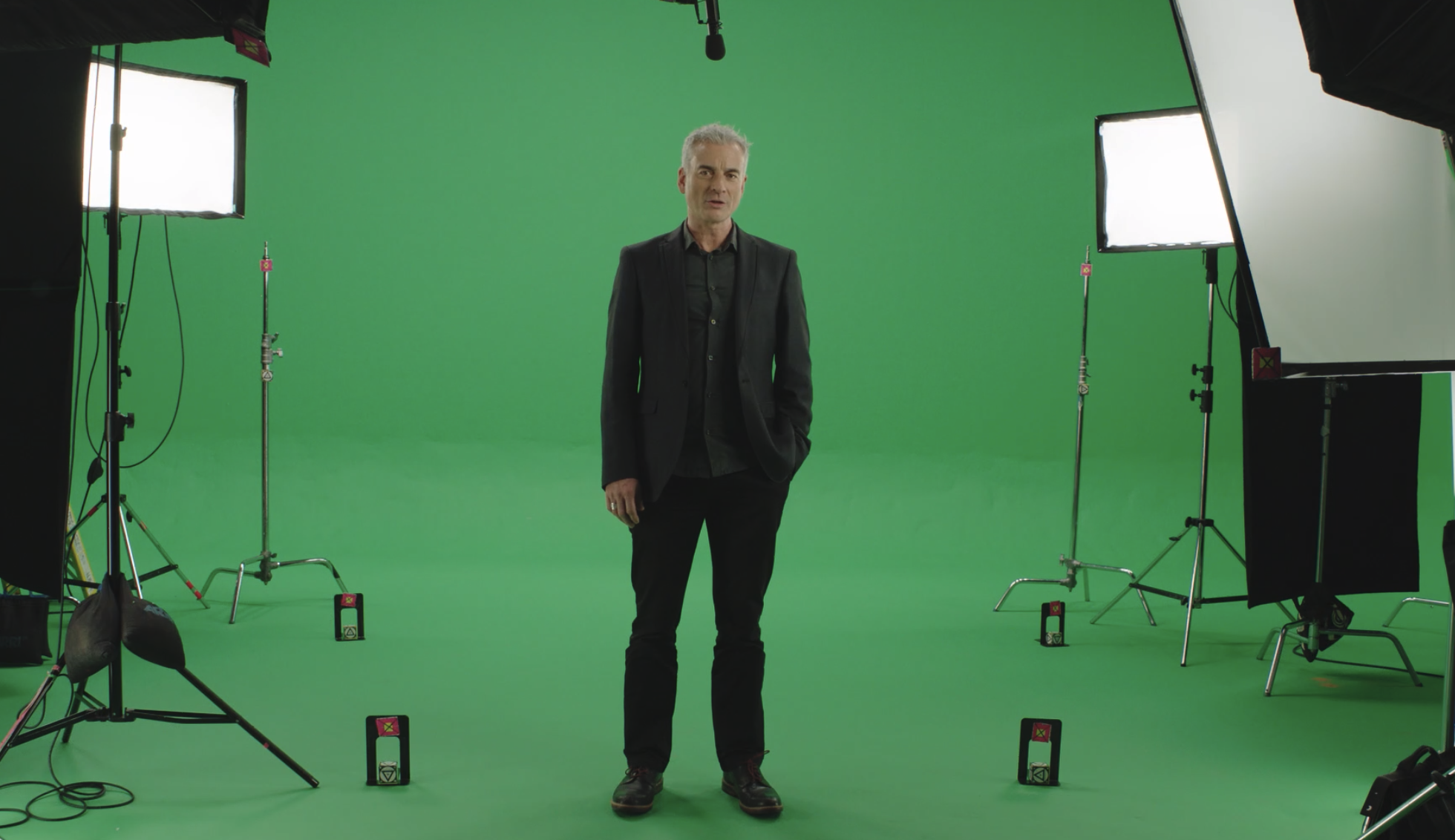
LED walls bring the environment into the room
An LED wall takes the opposite approach. Rather than replacing the background later, you put it there on the day and shoot it in camera. We have been running LED volume hire since March 2025 in partnership with CUBE Studio, who have now built walls here more than once, most recently in August 2026. What we provide is the stage and the infrastructure, meaning the height, the power, the blackout and the soundproofing, along with the specialists to assemble and operate the technology.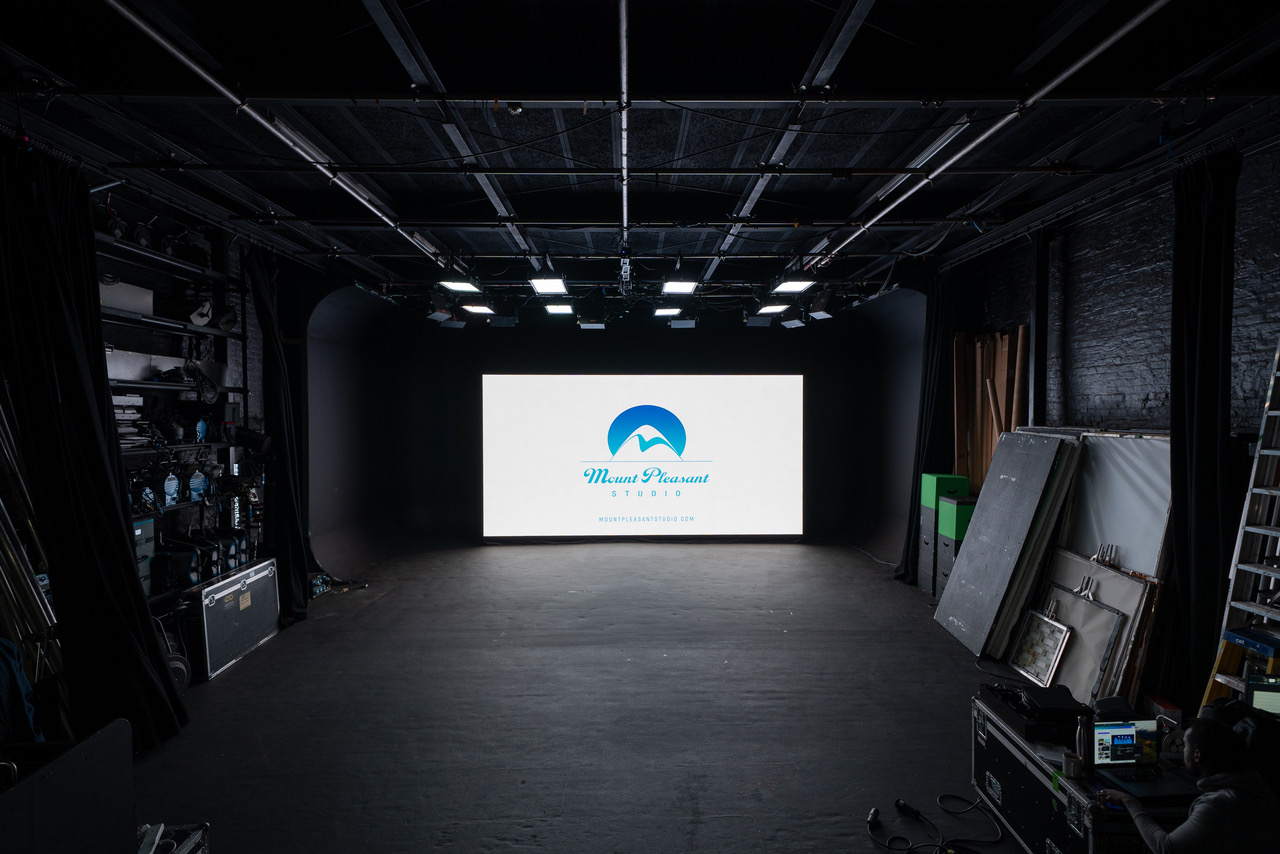 It earns its keep when the environment needs to interact with the subject: reflections on a product, a presenter who has to react to what is around them, or a client who wants to see the finished frame on the monitor rather than take it on trust.
There are two costs. You give up flexibility in post, because what you shoot is what you have. And the background content has to exist before the shoot day rather than after it, which moves work and budget earlier in the schedule than some productions expect.
Most of what we shoot needs none of it
It would be misleading to write all this without saying that the majority of our busiest days involve none of the above. In recent months we have had Hungry Man in with Katherine Ryan for an Andrex social campaign, with the whole studio painted pink; Wonderhood Studios shooting commercials; Bandicoot shooting a promo with Alan Carr for The Masked Singer; the BBC in for a Comic Relief Wuthering Heights piece; LADbible on Disney+'s Women's Champions League coverage; Copa90 shooting Michelob x FIFA Stories; and Miniminter, JME and Myles Smith recording a music gameshow format for YouTube. Chunkz presented another gameshow format sponsored by JD Sports. Alongside all that runs a steady diet of interviews, branded content, commercials and visualised podcasts.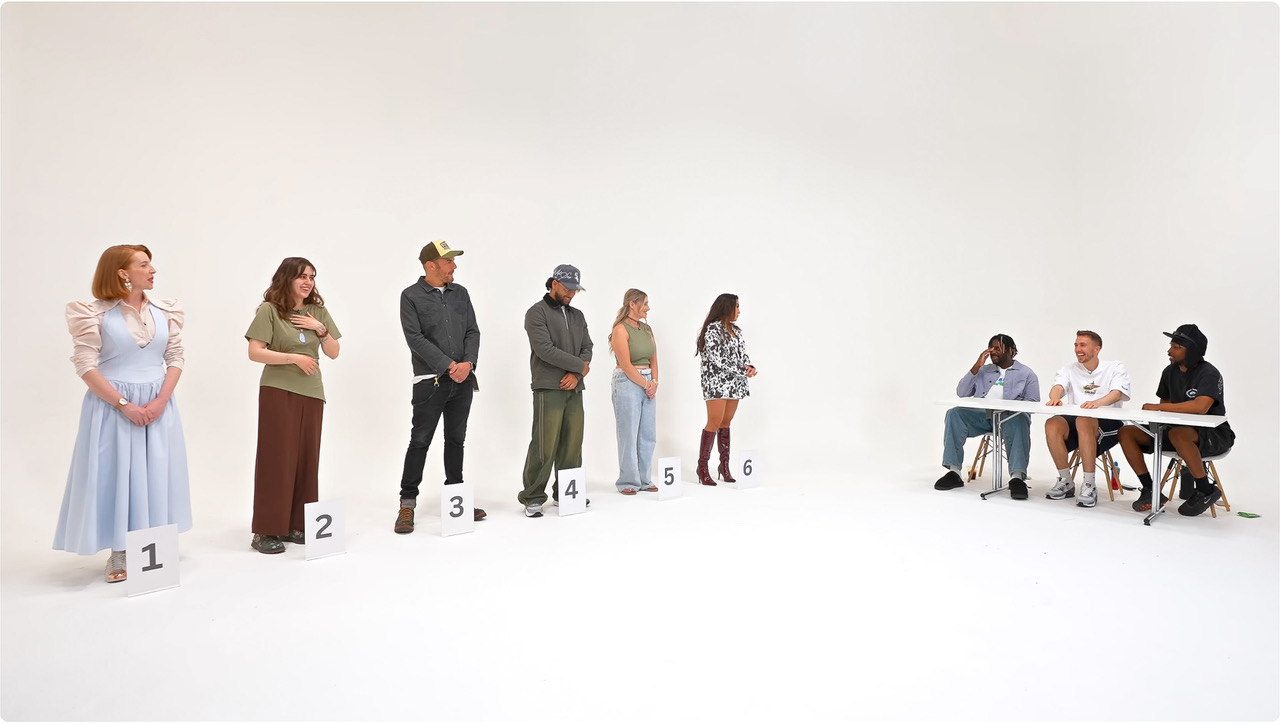 Every one of those either used the pre-lit infinity cove or built a set on the stage. What they have in common is not technology. It is a flexible soundproofed stage in Central London that can be turned around into something else by the following morning.
So which one do you need?
Green screen, LED and AI are not competing for the same job. There are three different answers to the question of where the background comes from, whether that is post, the day itself, or a machine, and plenty of productions need none of them. A shoot might use a practical set for one sequence and green screen for another, then put an LED wall behind a product with a landscape generated in advance. The useful order is to start from what the finished piece has to do and work backwards to the most efficient studio setup, rather than picking the technology first and finding a use for it.Come and have a look
If you would like to talk any of this through, or just come and see how big 31ft by 41ft actually is, we are five minutes from Farringdon and the espresso machine is on. Contact Mount Pleasant Studio or call 020 7837 1957.Frequently asked questions
Choose green screen when the background has not been decided, when the same footage has to work in several different edits, or when the budget for environment work sits in post. Choose an LED wall when the environment has to interact with the subject, when you need reflections and interactive light to be real, or when the client wants to sign off the finished frame on the day. You can of course also use an LED wall as a giant TV in a set, which can also look impressive. A green screen buys you flexibility; an LED wall buys you certainty.
Yes, and in our experience that is currently the more common way of doing it. The performances are filmed conventionally against green, and the AI-generated environment is composited afterwards, exactly as a matte painting or a plate would have been. It changes the post workflow rather than the shoot day.
Enough to light your talent separately from the background, which in practice means getting them several feet clear of the back wall. Our stage is 31ft by 41ft, which is comfortable for most work. Spill is the single most common cause of expensive keying, and it is far cheaper to solve with floor space on the day than with roto in post.
It does if you are shooting interviews or dialogue. There’s nothing worse for talent than having to retake due to traffic, plane or train noise and nothing worse for editors than echoey dialogue.
Mount Pleasant Studio is at 51 to 53 Mount Pleasant, London WC1X 0AE, about seven minutes’ walk from Farringdon and Chancery Lane stations.